
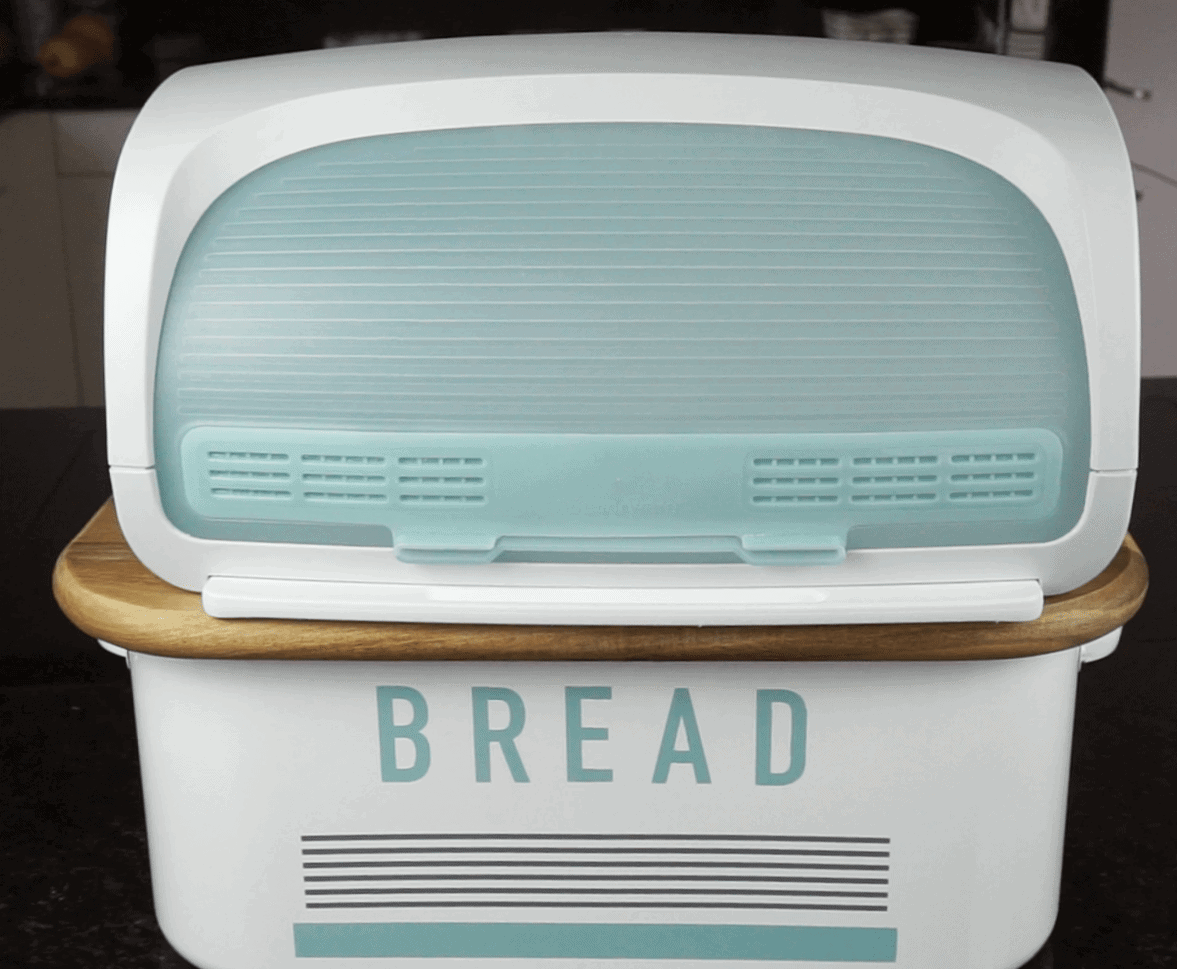
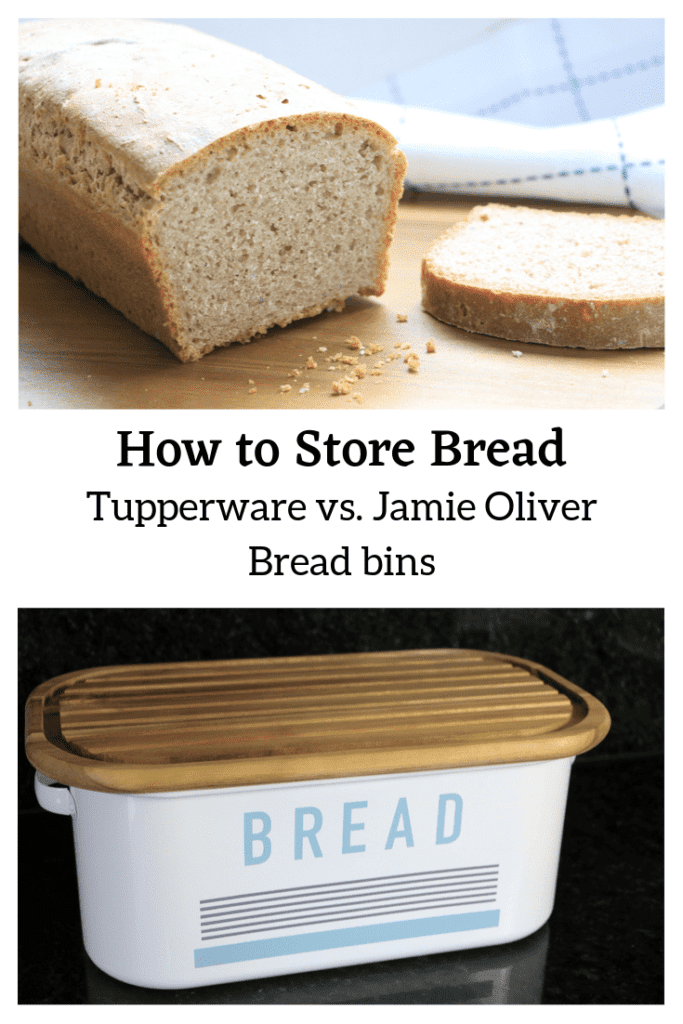
Recently, I posted Sourdough bread and other bread recipes in my older posts. Now how to store this delicious homemade bread to make it last longer and still keep fresh. I know 3 different ways to store bread and have been following it now for 2 decades. Apart from tips on how to store bread, I will review 2 top brands of bread storage systems here.
3 Top tips for storing bread
- Store bread at room temperature
- Don’t keep the bread in an air tight box but in cool place with some airflow
- Freeze the bread
Video on how to store bread and Bread bin review
1. Store bread at room temperature
Bread is crusty and tastes best on the first day but loses taste on the second day and will turn soft. So its best to keep bread at room temperature for no more than two days. Room temperature should be around 20ºC . Keep it away from direct sunlight in a cool and dry place, such as in your pantry or in a bread box. Its good to invest in a good quality bread box. We will go into that too.
Keeping the bread in fridge draws out the moisture and the bread becomes stale three times faster than it would at room temperature. This happens from a process known as “retro-gradation”, which simply means that the starch molecules crystallize and the bread gets tough.
2. Store bread in a good quality bread bin
My experience is if you store bread in an airtight box, they go moldy very quickly. There should be some air flow to keep the bread fresh and at the same time prevent it from drying up. Fresh home baked breads last longer in a bread bin than store bought breads. For more than a decade now, I have been storing bread with Tupperware Breadsmart and I am very satisfied with this bread box.
3. Freeze the bread
If you have more bread than you can consume, the best way to store this excess bread is by freezing. Freezing bread drops the temperature enough to stop the starch in the bread from recrystallizing and getting stale.
- Be sure to store it in plastic freezer bags or heavy-duty foil, as lightweight household foil isn’t suitable for freezing.
- Label and date it to prevent it from becoming a mystery cube.
- Consider slicing your bread before freezing. That way you won’t have to slice it while it’s frozen, and it’s often difficult to slice post thawing.
I sometimes bake a couple of extra breads and freeze them whole. When ever I need the bread, I thaw it overnight and then heat up the bread as a whole in hot air at 150 deg. centigrade for about 10 minutes . You will have to use up this bread quickly.
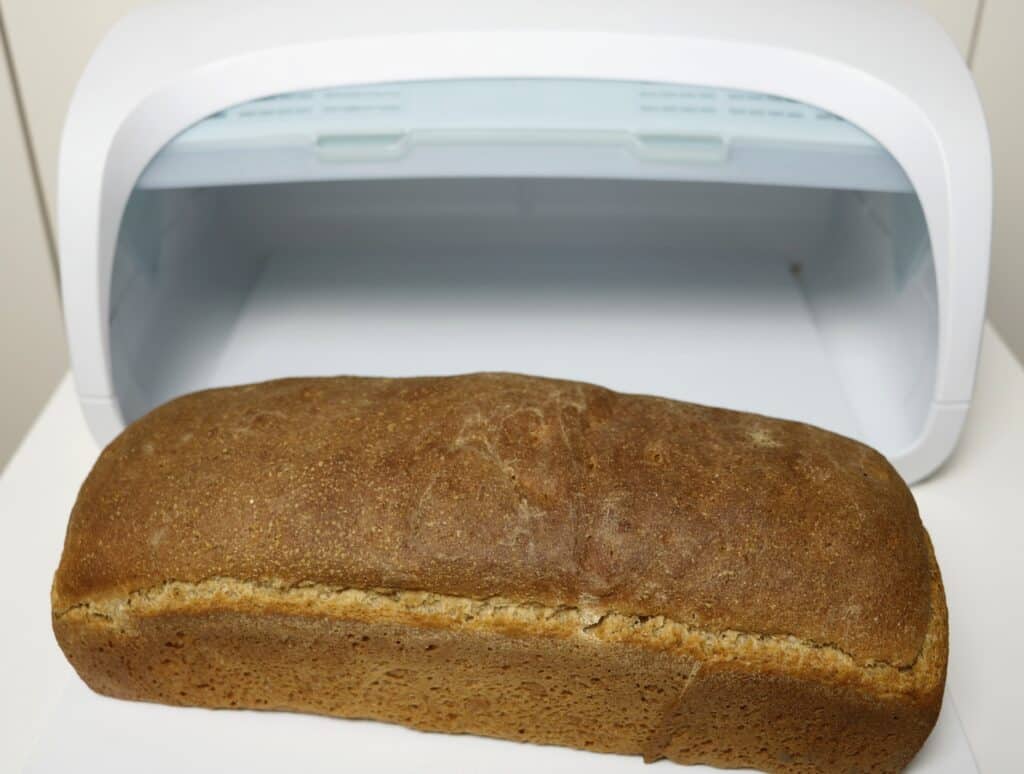
Store bread in a bread bin and which one?
Many of the master bakers advice to store bread is in a good bread box. Personally I don’t like storing bread in plastic bags. We don’t even buy store bought bread that are packed in plastic. They tend to go bad quickly. Luckily in Switzerland if we have to buy bread, we can get them in open or loosely packaged in open bags.
Since my bread baking journey began, I invested in a bread bin. The first one I got was a wooden bin from IKEA. Despite many years of usage, the smell of the wood varnish outside lingered in the bin so I changed to the pricey Tupperware Breadsmart in 2008.
Tupperware Breadsmart
Although Tupperware products are made of plastic, I have to say that this product is worth every penny you pay. Tupperware plastics are BPA free and moreover I am not using this to heat up food, so its all OK with me. All the parts in this bread bin are easy to dismantle and are dishwasher safe.
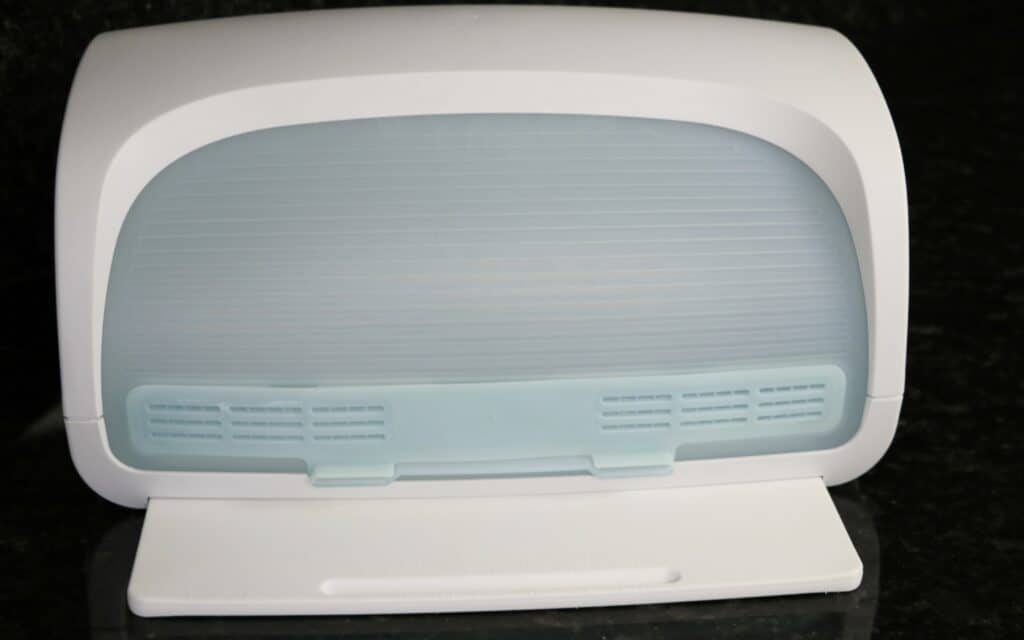
Tupperware Breadsmart has a system called condense control. The condense control is a small mesh which is attached to the lid on the shutter of the bread box. This is the only part which is not dishwasher safe. This condense control system provides air circulation inside the bin, that despite the bread being stored in a box, the bread can still breath and its doesn’t get moldy. The bread also remains longer fresh. We sometimes have bread up to 3 or 4 days in this bin without mold. Store bought breads dry up quickly unlike home baked breads. I have never had till now a moldy bread from this box.
The only down side of Tupperware bread storage is the high price. I paid CHF 80.- plus another 25 CHF for the bread cutting board. This bread cutting board is easy to store below the bin and slides easily for use. Tupperware gives a life long warranty for their products for normal wear and tear. So this is a definite plus. Plus if you consider the amount of money you save on not throwing away moldy breads then its a win win.
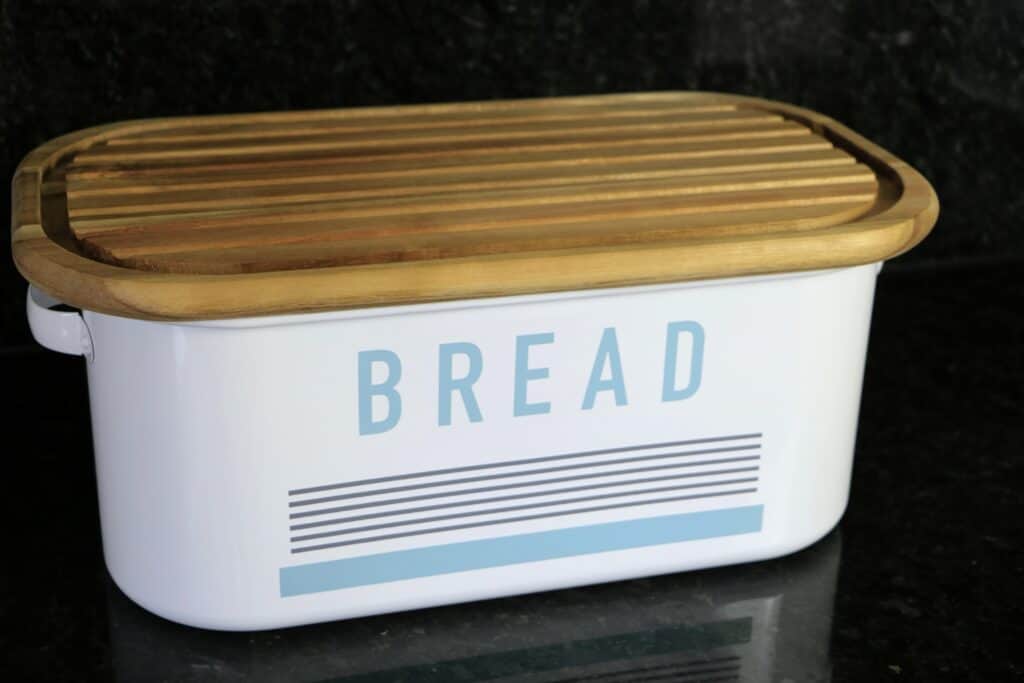
Jamie Oliver Bread Bin
This bin was my recent purchase. Since some time I have been on the look out for new bread bin due to all the coverage plastics have got in the recent years. So I ordered this trendy yet Vintage looking bread bin from Jamie Oliver. The design sold me. The Lid can also double as a bread cutting board which is also designed to collect all the bread crumbs.
The lid is made of Acacia wood and is well made without any edges. The bread tin is made out of steel and painted over and has 2 handles. This bread box was not on the cheap side either. The cost was 115 CHF which was also very pricey.
The bread bin weighs 2.82 Kg. And the size is L 44.3 x W 25 X H 18.5 cms. Compared to the Tupperware which on the other hand weighs around 1.3 kg with the cutting board. Size of Tupperware is L 38 x W 25 X H 19 cm.
I don’t know if there is a life long warranty on this bin. This bread bin has no condense control system. So the wooden lid should act as that because its a natural material and the tin is not air tight.
Which storage to choose and how to store bread
Finally, after much deliberation, I decided to return Jamie Oliver bread bin and stick with the Tupperware Breadsmart. This was mainly because the Jamie Oliver bread bin was too big for our needs. I usually store just 1 loaf of bread at any given time. Jamie Oliver bread bin was way too big and it was taking up too much of my counter space although it was just 6 cms wider. I just wish Jamie Oliver bread bins came in 2 different sizes.
Somehow, because I am so used to opening the shutter and grabbing the cutting board easily was also another reason why I decided to keep my older Breadsmart.
PIN IT FOR LATER

1 comment
[…] Yes, you can freeze sourdough bread. The best way to freeze boule is by slicing and then freezing in a tray before transferring to ziploc bags. Check out my post on How to Store Bread […]