Energy and Cost Efficient Laundry Tips
Disclosure: This post contains affiliate links, meaning, at no additional cost to you, we will earn a small commission if you click through and make a purchase. Learn more
- Home
- Home & DIY
- Cleaning & Organization
- Energy and Cost Efficient Laundry Tips
Everything about this laundry room was planned to run like a Swiss watch — efficient in cost, space, and energy alike.
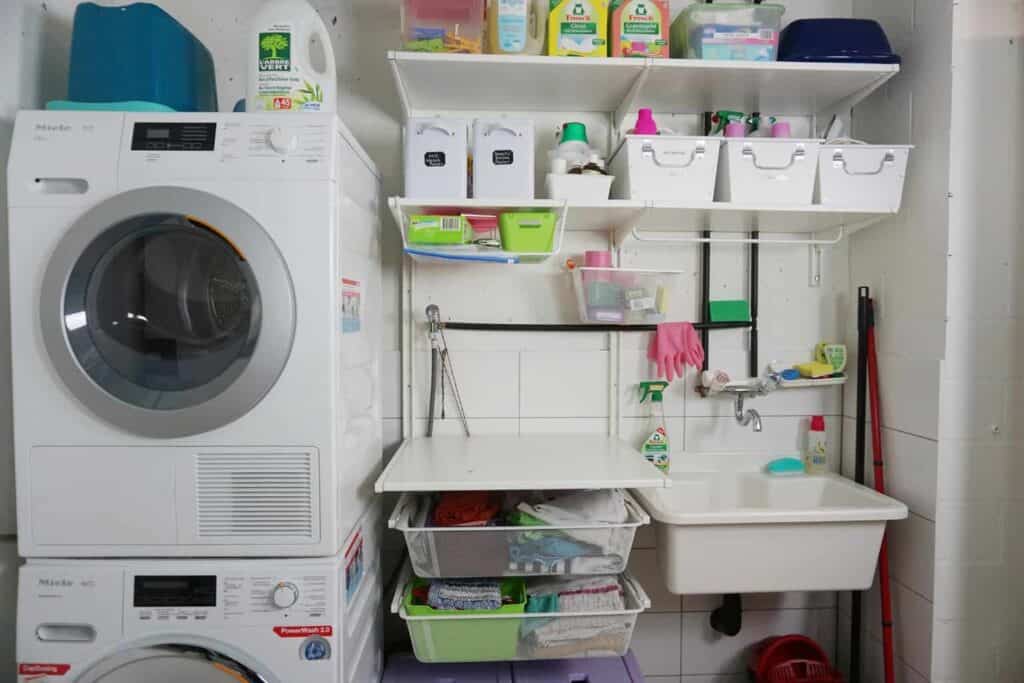
The Swiss are known worldwide for efficiency and innovation. Everything has to run like a Swiss watch, especially in this energy and cost efficient laundry room. Doing laundry is a vital part of daily life, and in the long run, this room needs to serve well not just in terms of cost and space, but also on the energy bill. A lot of thought and planning went into this energy and cost efficient laundry room in the basement, and these are some tips on setting one up efficiently.
Table of Contents
Save Energy and Cost with Traditional Methods — Use Clotheslines
Drying clothes on a line is the most energy and cost efficient laundry tip there is. The dryer gets used rarely here — it’s the most wasteful way to dry clothes, and clothes coming out of a dryer always seem to come out limp and wrinkled. Indoor clotheslines and a portable Stewi clothesline for summer have always been part of the setup.
Clotheslines are standard in Swiss apartments and houses. The very first place lived in even had one in the garden in addition to the basement line, and a later rented flat provided a shared portable one for summer. Hanging laundry outside in summer, under free solar energy, with that particular smell of sun on fresh laundry, is genuinely one of the best parts — unlike in much of North America, where hanging clothes outside is apparently frowned upon.
When the current house was bought in 2000, drying lines were the first thing fixed. In the previous house, clothes dried quickly enough without any extra gadget, so a dryer felt unnecessary. This house has an energy-efficient dehumidifier installed instead, which helps clothes dry quickly.
Invest in Energy Efficient Laundry Appliances
The first house, bought two decades ago, came with a good-quality Electrolux washer rated Energy Label A — the standard of the time. That machine lasted around 14 years. With advances in technology and a bigger push to save energy, Label A+++ has since become the norm.
For the current whole-house setup, the goal was the best quality available. The initial cost was high, but it pays off over time through lower energy consumption and bills. V-Zug, a highly innovative Swiss-made brand, supplies most kitchen appliances in this home and in most Swiss households generally — with one exception: the laundry room, where high-end Miele appliances were chosen instead this time. It felt a little unpatriotic to go non-Swiss-made after years of V-Zug, but the features on offer made it worth the switch, and the purchase has genuinely paid off.
Heat-Pump Dryers Are Very Energy Efficient
The dryer here is a heat-pump model, among the most energy-efficient options available. A heat-pump dryer extracts heat from the surrounding room air and uses it to heat the air inside the dryer, rather than relying on a heating element the way a conventional electric dryer does. Some dryers combine both technologies as hybrids. Heat-pump dryers use 20 to 60 percent less energy than conventional ones.
5 Tips for an Energy and Cost Efficient Laundry Room
Supplies List
- Indoor clotheslines
- Portable Stewi clothesline (for summer)
- Energy-efficient washer & heat-pump dryer
- De-humidifier
- IKEA Algot shelving system
- Organic, biodegradable detergents
- Washer balls
Instructions
1. Use Clotheslines:
Drying on a line is the single most energy and cost efficient laundry habit — the dryer gets used sparingly, since it’s the most wasteful way to dry clothes and tends to leave them limp and wrinkled.
2. Invest in Energy Efficient Appliances:
A high-quality washer and a heat-pump dryer cost more upfront but pay off over time through lower energy bills. Heat-pump dryers in particular use 20 to 60 percent less energy than conventional models.
3. Set Up an Efficient Organization System:
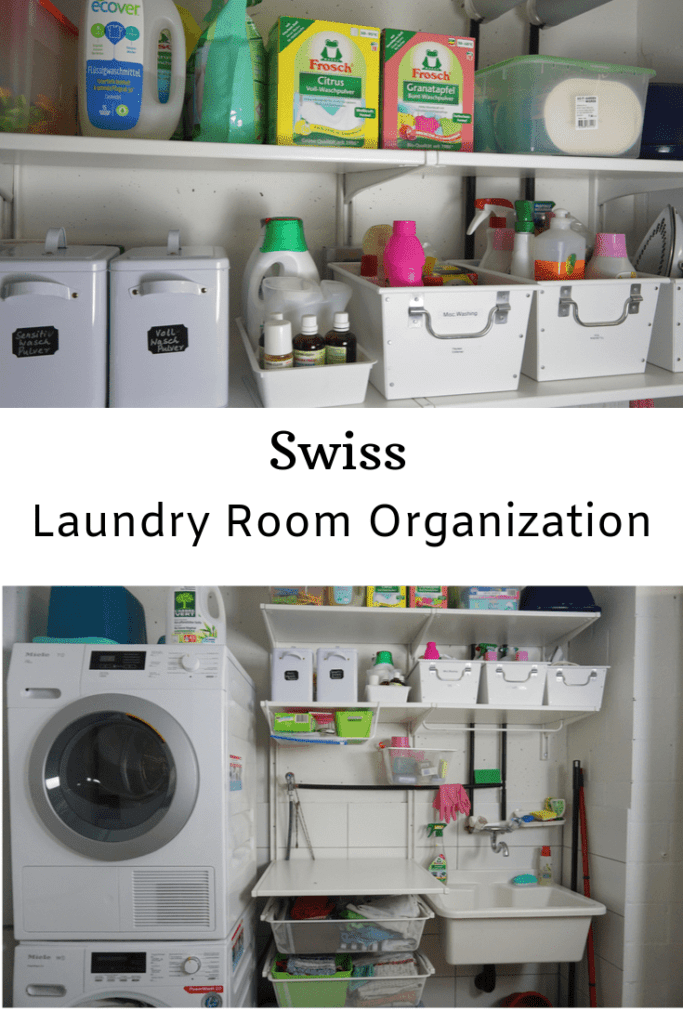
An IKEA Algot shelving system, mounted on the wall with brackets and planks, keeps detergents and supplies within easy reach and avoids duplicate purchases from not being able to see what’s already in stock.
4. Bulk Buy Organic, Biodegradable Detergents:
A good organization system makes bulk buying practical, which saves money and supports smaller manufacturers of organic, biodegradable detergents.
5. Plan an Energy Efficient Laundry Day:
Collecting laundry over a few days and running full loads makes the most of resources, and washing during off-peak hours can bring additional savings.
Building a Practical Laundry Organization System
To make the most of the space and supplies, an IKEA Algot shelving system was installed — decided on even while the house was still under construction, for its design and practicality. At first, the plan was to avoid drilling into the walls, using stacked baskets on a trolley instead. That turned out to be impractical: no good overview of supplies, no room for backup detergent, and things ended up duplicated that were already in stock. The baskets weren’t especially stable either.
After a year of struggling with that setup, the system got re-purposed onto the wall with brackets and planks instead. The laundry room looks brighter and works far better now. There’s no real interest in decorating a laundry room in the cellar — it just needs to function efficiently, with laundry done using minimum effort.
Tips for Energy Efficient Laundry Days
Lower the temperature, raise the spin speed: programming wash cycles this way means clothes dry faster afterward and use less energy if they do go in the dryer.
Check for off-peak energy hours: many areas offer lower rates for washing at certain times, like weekends or specific night hours.
Don’t overload the machine: clothes won’t come out properly clean if the machine’s too full.
Use washer balls: they help cut down on how much washing powder is needed per load.
Bulk Buying Organic Detergents
If a good organization system is in place, bulk buying laundry supplies becomes practical, saving money and making it easier to catch trusted detergents on sale. Only organic and biodegradable detergents get used here, both for the environment and for the family’s health — Ecover, Frosch, and Sonett are among the best brands available in Switzerland. Making detergent from scratch was considered too, but sourcing the raw materials proved too difficult, so that idea was dropped.
Supporting these smaller manufacturers of quality organic and biodegradable detergents matters too — without customers, they wouldn’t stay in business, and that option would disappear altogether. Buying in bulk and storing the overflow in the laundry room’s space-saving shelving keeps costs down without giving up on that principle.
Planning an Energy Efficient Laundry Day
Roughly 8 to 10 loads run through this laundry room each week. Laundry gets collected over 3 to 4 days and sorted by washing temperature, color, and room before running everything at a stretch. Switzerland offers additional cost savings for washing over the weekend or during certain night hours, making off-peak laundry a genuine way to save. Night loads aren’t practical here though, so washing usually starts in the late afternoon and wraps up by midnight, using the most energy-efficient cycle the machines offer.
Where Most of the Savings Come From
Overloading the machine is avoided, since clothes don’t come out properly clean that way, and organic detergent — not cheap to replace — gets used sparingly except for heavily soiled loads. Washer balls help cut down on how much detergent is needed too. Ultimately, avoiding the dryer as much as possible, thanks to an efficient dehumidifier that dries clothes quickly, is what saves the most here — the dryer gets used only sparingly, even with a heat-pump model on hand.
Watch the Video
Frequently Asked Questions
Yes — they use 20 to 60 percent less energy than conventional dryers, by extracting heat from the room air instead of relying on a heating element.
It gives a clear overview of what’s in stock, which helps avoid duplicate purchases and makes room for backup detergent — stacked baskets proved far less practical by comparison.
Yes — in Switzerland, washing over the weekend or during certain off-peak night hours can bring additional cost savings.
Your feedback is valuable
I would love to hear your laundry tips — do you have a different energy efficient laundry room organization you’d like to share? Thank you so much for visiting Vital Fair Living – we’re so happy you’re here! and thanks for taking the time to read this post. I would love it if you can share this post using the social media buttons.