
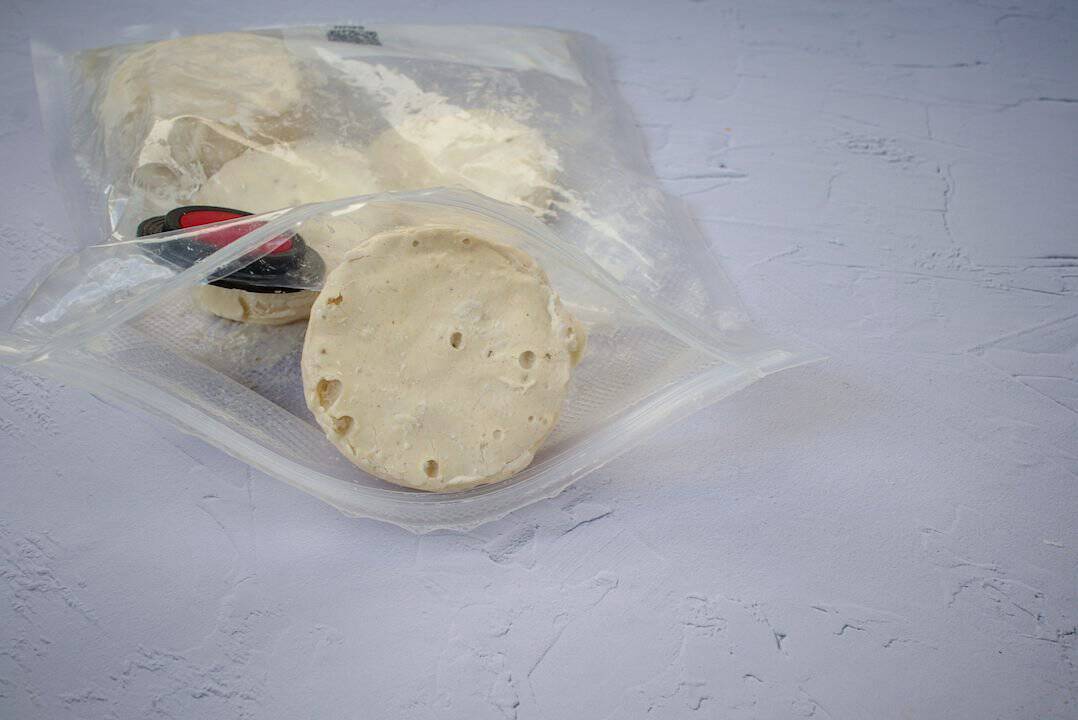
Your sourdough starter has been sitting in the freezer for a while because you have taken a break from baking. Are you now wondering if it’s still alive or just a very sad brick of flour and water. The good news is that in most cases, you can bring it back to life. I will be giving you a step by step instructions on how to revive a frozen sourdough starter.
Freezing a sourdough starter is basically putting the yeast and bacteria into deep sleep. Your job now is just to gently wake them up again (no alarm clocks, just flour and patience).
Check what you have to work with
Take your frozen starter out and let it thaw in a covered container at room temperature. Once it’s soft:
- If it smells slightly sour, tangy, or yeasty then its a good sign.
- If you see a little gray liquid on top which is called the hooch that is also totally normal.
- If it smells rotten, like garbage or mold then unfortunately, it’s likely not safe to revive.


Tools you will need for reviving your frozen sourdough starter
Disclosure: This post contains affiliate links, meaning, at no additional cost to you, we will earn a small commission if you click through and make a purchase. Learn more
Kitchen Scale
Weck Jar for Sourdough– I use this, as its Ideal. You can use a wide mouth Mason jar too.
Step 1: Thaw Your Frozen Starter
Let the starter thaw completely at room temperature. Don’t rush it in the microwave or with heat because slow thawing keeps the microbes happier. Depending on the size, this can take a few hours to overnight.
Step 2: Give It a Gentle First Feeding
Once thawed, don’t use the whole thing right away. Scoop out about 1 tablespoon of starter, if you have less to begin with. I usually freeze it in silicon molds so its easy to take one mold out and thaw. In case, this batch doesn’t work then I have a few more to work with.
Step 3: Watch for Signs of Activity
Mix your 1 tablespoon starter with
- 50g flour (any unbleached all-purpose or bread flour works)
- 50g room-temperature water
Stir until smooth, like a thick pancake batter. Cover loosely (lid should not be sealed tight) and leave it at room temperature.
Step 4: Wait for activity (24–48 hours)
Wait and watch. This is what you will be looking for:
- small bubbles
- slight rise in volume
- a pleasant sour smell
- If nothing happens in 24 hours, don’t panic. Frozen starters can be slow.
Step 5: Start regular feedings
Once you see even a little activity, switch to regular feeding. Discard most of it (keep about 1 tablespoon again), then feed:
- 50g starter
- 50g water
- 50g flour
Do this every 12–24 hours. After a few days, the frozen sourdough starter should start doubling in size within 4–8 hours after feeding.

Step 6: Success when you revive your frozen sourdough starter
When your starter consistently:
- doubles in size
- looks airy and full of bubbles
- smells pleasantly tangy, not harsh
At this point, you can store it in the fridge or start baking again.
How to check if your revived frozen sourdough starter is ready
Do the float test. Drop a little of the starter into a bowl with water. If the starter is floating then its ready. You can get baking with some of the recipes from this site like Artisan sourdough bread, Sourdough Focaccia and so on. You can use the discard after the first 2 days to make Sourdough English Muffins. These discard recipes are very forgiving, you can add baking powder to give the extra rise, so that the discard is not wasted. I also make sourdough discard waffles and pancakes with my discard.
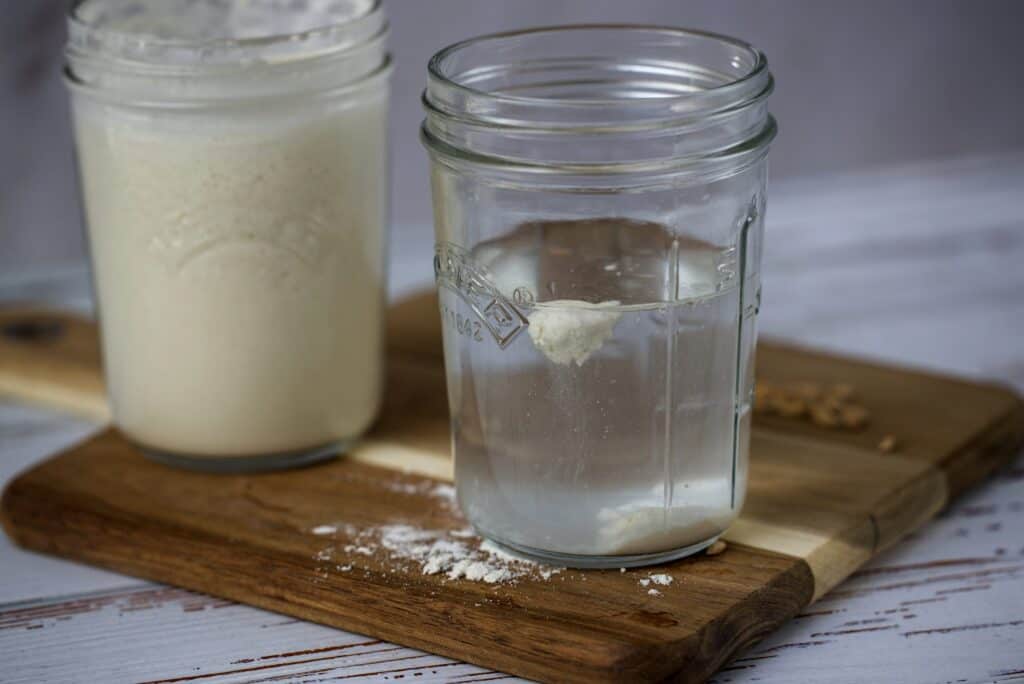
Video Tutorial How to revive frozen sourdough starter
Tips for troubleshooting when you revive your frozen sourdough starter
“Nothing is happening”
Give it more time. Reviving your frozen sourdough starters can take several feed cycles to wake up.
“It smells weird at first”
That’s normal. Early revival can smell off before it stabilizes.
“It gets active then dies again”
Keep feeding. It often takes 3–7 days to fully stabilize.
Reviving a frozen sourdough starter is less about magic and more about consistency. You’re basically rebuilding a tiny ecosystem from pause mode. Be patient, feed it regularly, and don’t give up too early—these little cultures are surprisingly tough. And once it’s alive again, you have revived your frozen sourdough starter successfully. I am now baking again with my 6 year old revived frozen starter after I took a pause during extended breaks.
Your feedback is valuable
If you try this recipe and love it, I would love if you come back and gave it 5 stars! Thank you so much for visiting Vial Fair Living – we’re so happy you’re here! I would love it if you can share this recipe using the social media buttons you see next to the post.
Ingredients
- 1 tablespoon frozen sourdough starter, thawed
- 50g unbleached all-purpose or bread flour
- 50g room-temperature water
- Additional flour and water for regular feedings
Instructions
- Remove the frozen sourdough starter from the freezer and allow it to thaw completely at room temperature.
- Scoop out 1 tablespoon of the thawed starter into a clean jar.
- Feed the starter with 50g flour and 50g room-temperature water, then stir until smooth.
- Cover the jar loosely and leave it at room temperature for 24–48 hours.
- Watch for bubbles, a slight rise, and a pleasantly tangy aroma.
- Once activity begins, discard all but 1 tablespoon and feed again with equal parts flour and water every 12–24 hours.
- Continue feeding for 3–7 days, or until the starter consistently doubles in size within 4–8 hours after feeding.
- Your revived starter is now ready to use in your favorite sourdough recipes or store in the refrigerator.
Notes
A small amount of gray liquid (hooch) is normal after thawing. If the starter smells rotten or has visible mold, discard it. Patience is key—some frozen starters need several feedings before becoming fully active again.
