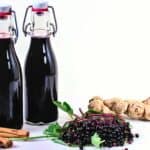
Elderberry Cold and Flu Syrup
Disclosure: This post contains affiliate links, meaning, at no additional cost to you, we will earn a small commission if you click through and make a purchase. Learn more
- Home
- Natural Living
- Home Remedies
- Elderberry Cold and Flu Syrup
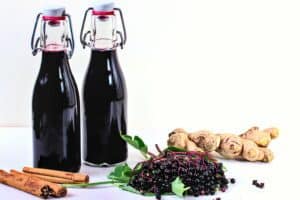
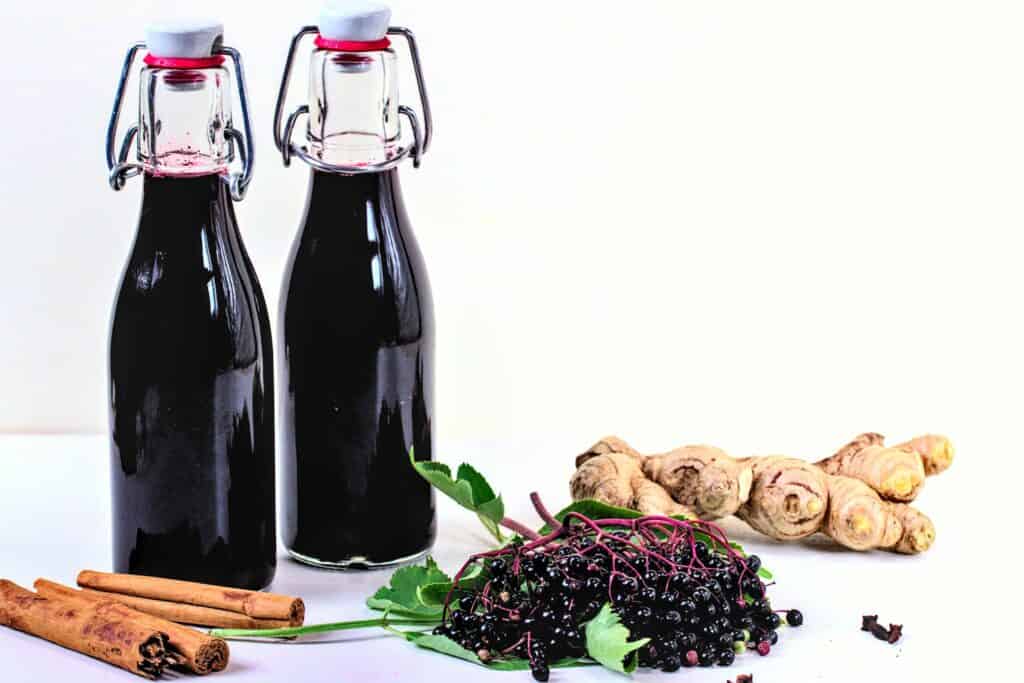
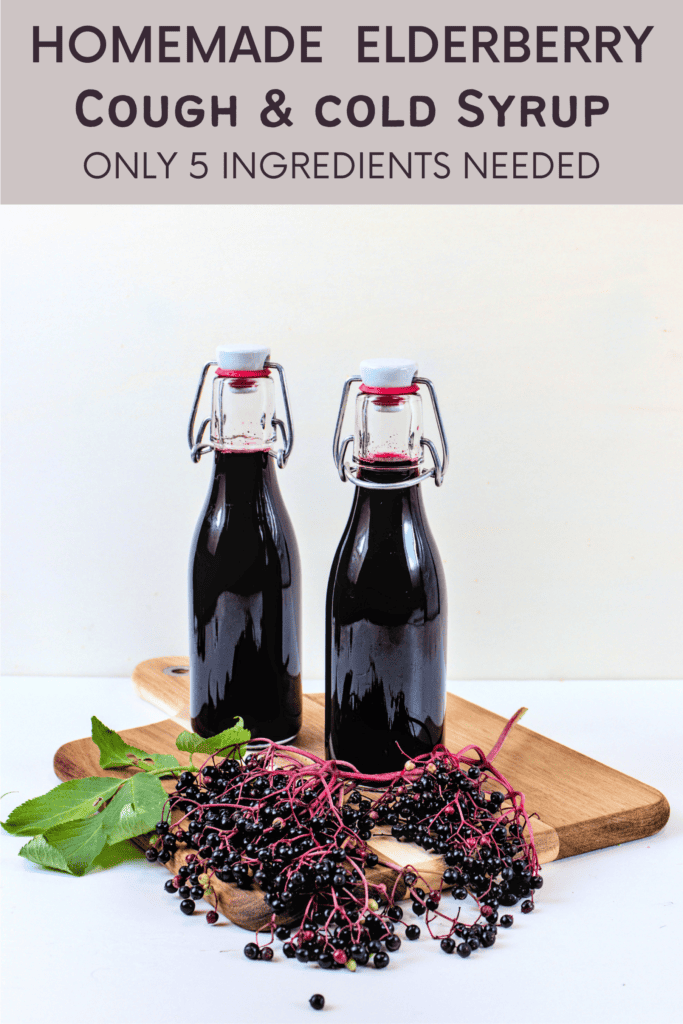
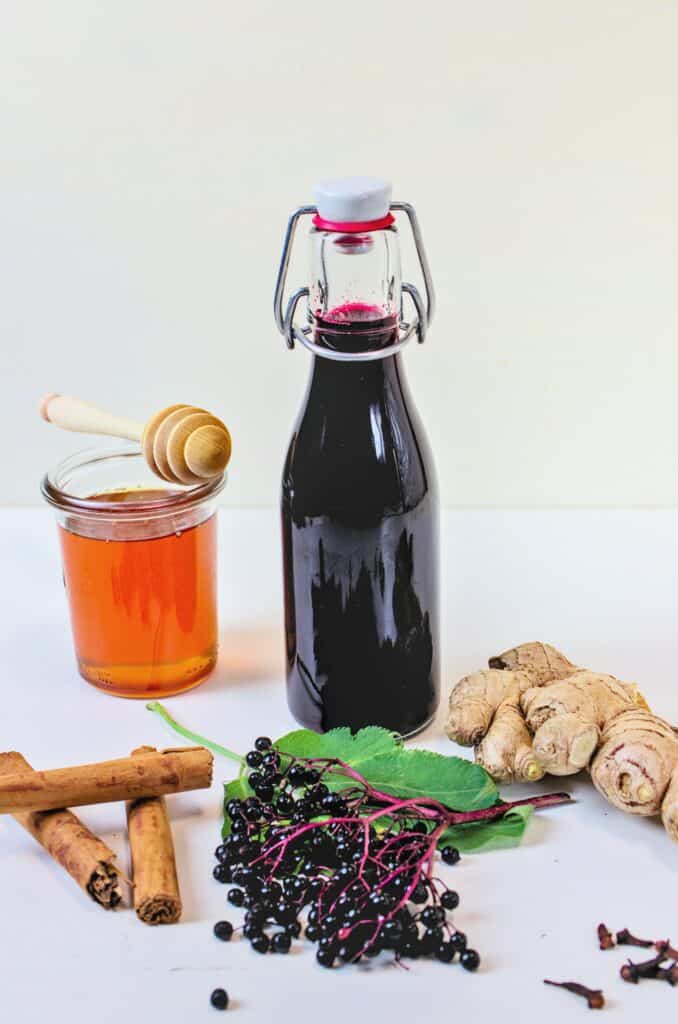
This elderberry cold and flu syrup comes from a family tradition of homemade remedies going back generations — made with elderberries grown right in the garden, plus ginger, cinnamon, cloves, and raw honey.
Homemade herbal remedies are the go-to here for simple cures to simple ailments like a cold, cough, or the flu. This immune-supporting elderberry cold and flu syrup recipe is naturally high in compounds that may help support the immune system and ease symptoms more quickly.
Elderberries can be used to make a variety of remedies, and this immune-supporting syrup is one of the favorites.
Table of Contents
A Family Tradition of Homemade Remedies
Since childhood, a grandmother and mother always turned to homemade remedies first for flus, colds, and fevers — a doctor’s visit was reserved only for the worst-case scenario. As a parent now, that same habit of leaning on natural remedies for minor ailments has carried through, both for a daughter and for the rest of the family. Elderberries are one of those remedies.
Elderberries happen to grow right in the garden here — genuinely lucky, since they contain natural substances called flavonoids, which seem to help reduce swelling, fight inflammation, and support the immune system. Some limited research on elderberry (Sambucus) has found it may ease flu symptoms like fever, headache, sore throat, fatigue, cough, and body aches.
Benefits of Elderberry
Elderberries naturally contain vitamins A, B, and C, which help stimulate the immune system. The benefits seem to be greatest when the syrup is started within 24 to 48 hours after symptoms begin — one study found elderberry could cut the duration of flu symptoms by more than 50%. A few studies have also suggested elderberry may help with bacterial sinus infections or bronchitis, though more research is still needed there.
Is It Easy to Grow an Elderberry Bush?
Elderberry grows almost wild across Europe. No planting was needed here at all, since a previous homeowner had already put in a variety of native plants and bushes. For anyone wanting to grow their own, this guide on growing and caring for an elderberry bush is a good place to start. The best harvest window runs from late August to mid-October. A garden full of herbs and plants like this one even makes it possible to whip up remedies for sick plants too.
Can You Eat Raw Elderberries?
Ingredients List
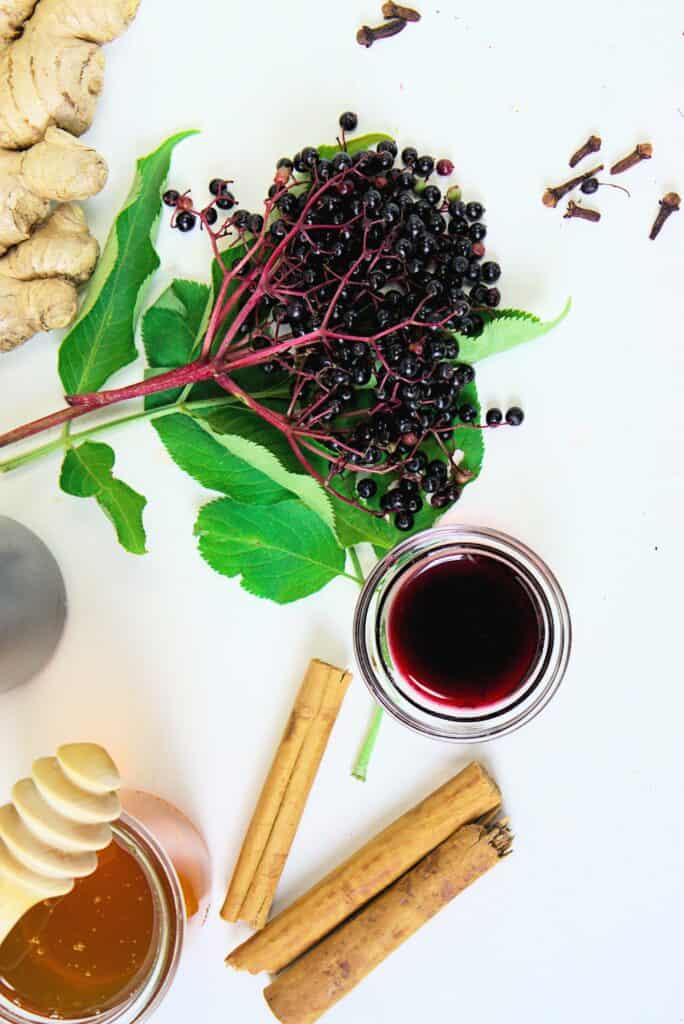
- 1⅓ cups fresh elderberries
- 3½ cups filtered water
- 2–3 tbsp grated ginger
- 1 tsp cinnamon, 1 tsp cloves
- 1 cup raw honey
Cooking Instructions
A Real Caution on Raw Berries:
Cooked elderberries (both pulp and skin) are edible for most Sambucus species, but the raw berries, along with other parts of the plant, are not. Leaves, twigs, branches, seeds, roots, flowers, and raw berries all contain naturally occurring compounds called cyanogenic glycosides, which are toxic. Eating enough of these compounds — whether from raw berry juice, flower tea, or drinks made from fresh leaves, branches, or fruit — can cause illness, including nausea, vomiting, stomach cramps, diarrhea, and weakness. Cooking the berries, as this recipe does, removes that risk.
Cinnamon:
A sweet bark grown across Southeast Asia, and a familiar spice here, used in sweets, teas, and everyday cooking. One of its most important active compounds is cinnamaldehyde, which may be responsible for some of cinnamon’s possible health benefits.
Cloves:
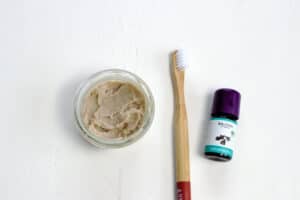
Another favorite spice here — the oils, dried flower buds, leaves, and stems all get used medicinally. Clove is applied directly to the gums for toothache, and clove oil is one of the main ingredients in the homemade toothpaste made here too. It contains a compound called eugenol, which may help ease pain and fight infection.
Ginger:
The spicy, flavorful root of the flowering plant Zingiber officinale — a real kitchen staple here, used in teas and everyday cooking. Beyond its role as a spice, ginger is considered a vital remedy for many ailments in Ayurveda.
Honey:
A natural sweetener, and studies suggest a small amount may help children cough less and sleep better. It carries healthy antioxidants, amino acids, and vitamins, and has been part of traditional medicine for treating wounds and burns for centuries — thanks to natural compounds that fight bacteria, promote healing, prevent infection, and ease swelling. Honey also keeps remarkably well. Caution: avoid heating honey directly, since doing so is thought to destroy its medicinal value — in Ayurveda, heated honey is even considered harmful to the body.
Why I Make My Own
Making this syrup at home comes down to a few simple reasons. First, it saves money. Second, elderberries grow right in the garden here — organically grown, freshly harvested, and hard to beat. The rest of the ingredients are already kitchen staples, so the whole syrup comes together with minimal effort. Why buy preservative-laden cold and cough syrups when the remedy is already in the backyard? Ginger, honey, and cloves are ingredients already reached for when making other Ayurvedic concoctions for similar ailments too.
Storage and Dosage
Storage: properly sterilized, this syrup should last about 3 months — still good here after 2 months. Small portions can also be frozen and used as needed.
Suggested dosage: some herbalists suggest about a tablespoon once every 3 days to support the immune system, increasing to around 2 teaspoons a few times a day if flu-like symptoms start to develop.
General rule followed here: take any remedy for milder ailments for about 3 days — even if symptoms ease up by day 2, one more day adds a bit of extra protection.
Other Sweeteners You Can Use
Vegans avoiding honey for its animal origin can substitute maple syrup or molasses instead. Honey also isn’t recommended for babies under 1 to 2 years old, and some people are allergic, so alternatives are worth having on hand either way. Sweeteners also help preserve the syrup — if skipping them altogether, the syrup should be consumed quickly.
Making an Elderberry Tincture Instead
Another way to use elderberries is as a tincture — since this involves alcohol, it’s only suitable for adults. To make one, mix concentrated elderberry syrup with equal parts food-grade alcohol, like vodka or brandy, and take a few drops as needed.
Watch the Video
Recipe Card
Elderberry Cold and Flu Syrup
5 Stars 4 Stars 3 Stars 2 Stars 1 Star
No reviews
- Total Time: 75
- Yield: 2 cups 1x
Description
A homemade elderberry cold and flu syrup, naturally high in immune-supporting compounds, made with ginger, cinnamon, cloves, and raw honey.
Ingredients
- 1 1/3 cups fresh elderberries (or 2/3 cup dried)
- 3 1/2 cups filtered water
- 2–3 tablespoons freshly grated ginger
- 1 teaspoon cinnamon
- 1 teaspoon ground cloves
- 1 cup raw honey
Instructions
-
Remove the Berries:
If using fresh berries, remove them from the stalks using a fork.
-
Wash and Combine:
Wash the berries thoroughly and place them into a heavy bottom pot.
-
Add the Rest:
Add water, ginger, cinnamon, and cloves to the berries.
-
Simmer:
Bring the mixture to a boil, then cover and reduce to a simmer.
-
Reduce:
Cook for about 45 minutes to 1 hour, or until the liquid is reduced by almost half.
-
Mash and Strain:
Remove from heat, mash the berries carefully with a spoon, and strain the liquid.
-
Add Honey:
Once the liquid has cooled to around 38°C, add the honey and stir well.
-
Store:
Store in a sterilized glass jar in the fridge.
Notes
Avoid heating the honey directly — add it only once the liquid has cooled to around 38°C, since heating destroys some of its properties.
- Prep Time: 15
- Cook Time: 60
- Category: Home Remedies
Nutrition
- Serving Size: 2 cups
- Calories: 6
- Fat: 20
Frequently Asked Questions
No — raw elderberries and other parts of the plant contain naturally occurring compounds called cyanogenic glycosides, which are toxic. Cooking the berries, as this recipe does, removes that risk.
No — honey isn’t recommended for babies under 1 to 2 years old, so an alternative sweetener like maple syrup or molasses is a better choice for very young children.
Heating honey directly is thought to destroy some of its medicinal value, so it’s best stirred in only once the liquid has cooled to around 38°C.
Your feedback is valuable
Did you like this Elderberry Cold and Flu Syrup recipe? Leave me a comment, I’d really love to know! Thank you so much for visiting Vital Fair Living – we’re so happy you’re here! I would love it if you can share this recipe using the social media buttons you see next to the post and give this recipe a 5 star rating.